important regulatory document 11 October 2025
Correct risk classification in accordance with Annex VIII of the Medical Devices Regulation Medical Device Regulation (EU) 2017/745 (MDR): Motorized treadmills
EUDAMED EMDN Code: Z129006 Treadmills for physiotherapy and/or diagnostic use
EUDAMED EMDN Code: Z129006 TREADMILLS FOR PHYSIOTHERAPY AND/OR DIAGNOSTIC USES
To all relevant economic operators, manufacturers, importers, EU authorised representatives, distributors, dealers, OEM/PLM, healthcare facilities, medical technicians, customers, notified bodies and authorities, as well as stakeholders
Motorised treadmills have been an indispensable part of healthcare facilities for many decades, with applications in diagnostics and therapy. However, risks and accidents involving serious injuries and rare fatalities are also known to occur with these powerful machines. Nevertheless, the medical benefits clearly outweigh the risks!
This document is dedicated to the correct risk classification by manufacturers to enable all economic operators, authorities and stakeholders involved to assess, plan and implement the responsibilities, necessary actions and risks accordingly.
Risk class | Rule | CE mark | Notified body | Assessment | Assessment |
IIa or IIb | 9 |
or other number | yes | correct |
|
I | 13 |
| No | incorrect |
|
The MDR stipulates that incorrect classification of a medical device means that the product is not marketable and therefore may not be distributed or placed on the European market.
The applicability of Rule 9, i.e. the delivery or exchange of energy when using treadmills as medical devices, is not only based on the intended purpose, the logic and the physical and biomechanical principles of walking and running on a treadmill, but has been confirmed countless times not only by the treadmill manufacturer h/p/cosmos but also by independent authorities and/or bodies and experts from industry and science, as follows:
28 February 2025 | BfArM decision dated 28 February 2025 with reference number: 91.3.32-5634-K-0049/24 In a letter dated 11 October 2024, h/p/cosmos, as the manufacturer, submitted an application to the BfArM (Federal Institute for Drugs and Medical Devices in Germany) to decide on the classification of a motorised treadmill with an interface on the basis of Section 6 (2) MPDG (German Medical Device Law Implementation Act). At the request of h/p/cosmos, the BfArM confirmed that, when used as intended, the treadmill exchanges energy with the patient.
|


h/p/cosmos sports & medical gmbh Am Sportplatz 8 DE 83365 Nussdorf-Traunstein / Germany EUDAMED SRN: DE-MF-000006147 phone +49 86 69 86 42 0 fax +49 86 69 86 42 49 email@hpcosmos.com www.hpcosmos.com
Abbreviated excerpt from the BfArM decision of 28 February 2025 for a "simple and completely normal" treadmill without a Robowalk gait trainer, without perturbation and without high speeds, with the following specifications: motor drive, running surface 150/50 cm, speed 0 ... 22 km/h, incline angle 0 ... 25%, interface for ECG and/or spiroergometry, optional heart rate measurement via accessories (e.g. POLAR), optional adjustable handrails, treadmill without measuring function, treadmill without diagnostic function, application for physiotherapy and diagnostics. | |
1998 to 2025 Every year | Notified body: TÜV SÜD Product Service GmbH, Munich Certification audit and annual surveillance audit from 1998 according to MDD / MPG and since 2022 according to MDR / MPDG / ISO 13485, including review of technical documentation with confirmation of applicability of Rule 9. https://www.hpcosmos.com/en/contact-support/media-downloads/certificates |
13 September 2024 | Bavarian State Office for Health and Food Safety, Munich Free sale certificate No. AP-2697-22-V6032-46309/12024 in accordance with Art. 60 Regulation (EU) 2017/745 in conjunction with § 10 Medical Devices Implementation Act (MPDG) in the currently applicable versions for submission to the competent authorities. ... after respective review of the EU declarations of conformity https://www.hpcosmos.com/en/contact-support/media-downloads/certificates Also confirmed by free sales certificates, e.g. with dates including: 8 May 2002, 28 June 2007, 2 May 2013, 18 July 2014, 1 September 2022, 29 August 2023 |
18 December 2023 | Paris Lodron University of Salzburg / Univ.-Prof. Dr. Hermann Schwameder Statement on energy exchange and expenditure when walking and running on a treadmill Paris Lodron University of Salzburg, Sports and Movement Science, Head of Department, Head of Biomechanics Working Group, Schlossallee 49, 5400 Hallein-Rif, Austria download |
30 | University Hospital Halle (Saale) / Associate Professor Dr. phil. Rene Schwesig Assessment of energy exchange during exercise on treadmill ergometers Head of Research Laboratory, MLU Halle-Wittenberg, Faculty of Medicine, University Hospital Halle (Saale), Department of Orthopaedics, Trauma and Reconstructive Surgery, Laboratory for Experimental Orthopaedics & Sports Medicine, Ernst-Grube-Straße 40, 06120 Halle (Saale) download |
13 February 2023 and 4 October 2023 | Dr. Björn Zimmermann / Sports scientist and authorised signatory at h/p/cosmos Dr Zimmermann has also created a PDF and a short video on the topic of energy transfer from electrically powered treadmills to the human body. Download PDF 20230213_Zimmermann_hpcosmos_Begruendung_Energietransfer_Laufband_Risikoklasse_II_EN_DE.pdf
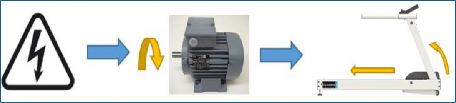
Electrical energy into kinetic energy
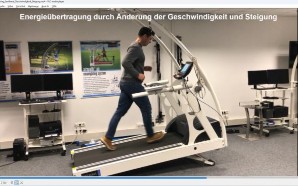
20231004_Energy_transfer_treadmill_speed_incline.mp4
|

8 April 2011 | Government of Upper Bavaria – Munich Trade Supervisory Office […] "The classification of medical devices is based on the principle that the higher the potential risk of negative effects on the human body, the higher the medical device is classified in the corresponding class. According to the recommendations of the EUROM VI and F+O working groups, based on the usual applications of medical devices, treadmill ergometers are assigned to class IIa in the list of classification examples in the "Ergometry" section. Notwithstanding this classification, taking into account Section II No. 2.5 Annex IX Classification Criteria 93/42/EEC and the potential risk to patients described by you within the meaning of Rule 10 - active diagnostic products specifically intended for monitoring vital physiological parameters and where the nature of the change could lead to an immediate risk (deliberately induced cardiac dysfunction) to a patient - endorses your classification as IIb." […] |
The BfArM does not examine product groups, but always examines each product on a case-by-case basis, taking into account the respective intended purpose and other performance data. The applicability of Rule 9 and the fact that mechanical kinetic energy is transferred/exchanged on the treadmill has now also been confirmed by the BfArM, among others. Ergo, h/p/cosmos assumes that Rule 9 applies to all motorised treadmills because the basic laws of physics and biomechanical principles of walking and running on a treadmill are identical regardless of the manufacturer and model. Motorised treadmill = Class IIa or IIb.
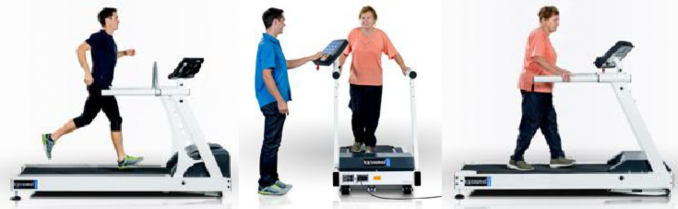
Example photos of simple "standard treadmills", e.g. in physiotherapy:
[…]
During the ground contact phase, both when running and walking, there is mechanical interaction between the locomotor and the moving treadmill belt. Accordingly, the kinetic energy of the electrically driven roller-treadmill belt system is transferred to the body of the locomotor, which then moves backwards. Against this background, an energy transfer (exchange of energy) takes place between the running belt, including the roller, and the person during the ground contact phase. Several studies show that this energy transfer during ground contact is not constant, but fluctuates due to mechanical conditions (braking and acceleration phases), which is particularly evident in the change in mechanical power during the ground contact phase and thus also indicates the aforementioned energy transfer between the treadmill and the locomotor (Savelberg et al., 1998; Sloot et al., 2014; Van Caekenberghe et al., 2012). The extent of these fluctuations depends, among other things, on body mass, treadmill mechanics and movement speed (Willwacher et al., 2021).
Both the theoretical principles and considerations as well as the empirical studies cited show that during locomotion on a treadmill, whether walking or running, there is a constant transfer of energy from the treadmill belt to the person and vice versa, i.e. an exchange of energy (energy transfer) between the treadmill and the locomotor.
[…] - End of quote –
[…]
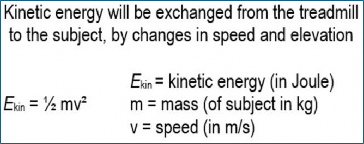
From a technical point of view, treadmills behave like conveyor belts (e.g. conveyor belts, luggage belts): they move objects from A to B. When a patient stands on the treadmill and it is started, the patient is moved backwards. The centre of mass (see above) is moved backwards. The patient must move to avoid falling. Similarly, the patient is moved upwards when the treadmill is driven into an incline by a lift motor. In both cases, kinetic energy is transferred from the treadmill to the patient.
Energy transfer
Although the energy transfer is clearly illustrated in point 1, standing on a treadmill is not the classic use. However, a hybrid form is a method of locomotion therapy in which one leg stands on the side footplates and the leg to be trained is placed on the moving treadmill belt (by the runner themselves or by the therapist) in order to move it passively backwards and thus mobilise it. The situation is similar when the patient is in a harness or lifting system (weight relief) and both legs are moved alternately through the running belt. This form is mostly used for patients with or without limited motor control of the legs (e.g. after a stroke or hemiplegia). Energy is thus transferred to the individual leg, which is partially or completely delivered by the treadmill.
Energy transfer
[…]
b. Speed changes during the gait cycle
Various studies have shown that treadmill speed is not constant during walking or running and is subject to variation (Nigg et al. 1995; Savelberg et al 1998; Willwacher et al. 2001). Motor power, control regulation, power supply, belt tension and lubrication, running style and runner weight play a decisive role here. When the runner's heel first makes contact with the treadmill ("heel strike"), the treadmill is initially slowed down and then accelerated again due to the motor control and the runner's push-off. Depending on the motor control, the speed may even exceed the set speed.
The runner thus has a significant effect on the belt speed, which Sloot and colleagues (2014) cite as the main reason for energy transfer (from the runner to the treadmill). Nevertheless, according to Savelberg and fellow researchers (1998), the continuous change in speed within a gait cycle causes energy to be transferred from the treadmill to the test subject. In their studies, Sloot and colleagues (2014) estimate an energy transfer of 0.11 joules per step at walking speeds. The running belt thus "pulls" the leg under the runner during the stance phase (Frishberg 1983).
Energy transfer
Motorised treadmills are therefore not purely passive systems, as they transfer a positive/active flow of energy to the test subjects. In any case, treadmills pose a certain risk due to their power, as has been shown in various studies (Noffsinger et al. 2017). If the energy transferred is greater than the patient can tolerate, this is potentially dangerous.
Safety standards must be observed and safety precautions (including a fall protection system and emergency stop button) must be taken to prevent harm.
Conclusion:
When treadmills are used, energy is transferred or exchanged with the test subject.
[…]
The energy exchange varies slightly depending on the gait pattern and/or running style.
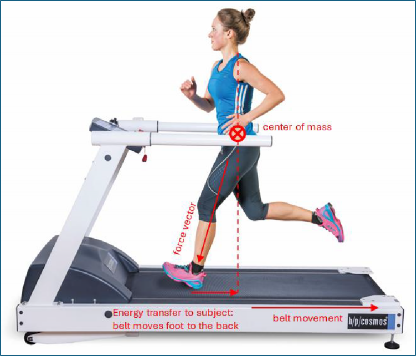 Image: h/p/cosmos
Especially when landing on the treadmill belt or when the heel touches down in front of the centre of mass (COM), the treadmill belt transfers significant kinetic energy to the human body.
This kinetic energy then moves the respective leg backwards from the position in front of the centre of mass after contact with the ground (heel strike).
For this reason, most medical and professional treadmills are equipped with very powerful drive motors ranging from 2.2 to 3.3 kW and are usually fused with 16 amps. Most treadmill manufacturers also specify a dedicated power line for the treadmill. The reason for this is that when the heel lands, the force vectors of the leg act against the running direction of the running belt, causing the motor to consume a very high amount of power for a short time in order to move the leg and prevent the running belt from slowing down significantly due to these force vectors.
Important: The body mass of a person (especially the torso and head) does not have a horizontal speed on a treadmill comparable to running on the road (overground). Only the legs and arms move cyclically in a significant horizontal forward and backward motion.
Of course, the muscles in the legs also have a significant effect through "pull movement" after the heel strikes the running belt. However, because the horizontal speed and thus the kinetic energy of the body mass are virtually absent when running on a treadmill (this is one of the fundamental differences to overground running on the road), the drive motor and the treadmill belt must provide a high energy supply/energy exchange. Especially when the heel strikes the treadmill belt in front of the body's centre of mass, in order to counteract these force vectors and to "push" the leg under the body's centre of mass, energy exchange takes place to counteract these force vectors and to "push" the leg under the body's centre of mass.
When pushing off with the toes at the rear end of the running surface, the energy exchange is reversed.
A strong push-off on a straight running surface, but even more so when walking and/or running uphill on a treadmill with an incline, transfers mechanical kinetic energy to the running belt through human muscle power. During these short phases, the treadmill's drive motor even becomes a generator and can briefly produce electricity.
In order to prevent the treadmill belt from accelerating beyond its target speed due to this energy input from the user, the treadmill motor must actually brake the belt slightly during this phase. This effect can also be clearly measured electrically on the drive motor and the electronic motor control of the treadmill.
If a treadmill is also used for perturbation and sudden disruptive stimuli such as "stumbling" or "slipping" (due to high acceleration or deceleration of the running belt) are applied to the treadmill, the energy exchange between the running belt and the person is even more intense and also more dangerous.
h/p/cosmos also specifies the following for such special applications:
Prescribed fall protection/fall stop safety device (e.g. safety arch [cos10170xx] with chest belt [cos14903-xx] and harness [cos10670-01] or fall protection system for ceiling mounting [cos15866xx] or airwalk ap [cos30028] weight relief system) for all applications in which a fall could pose an unreasonable risk (e.g. osteoporosis, high-speed or special applications, applications with persons who cannot jump off the running belt, such as children, physically impaired persons, etc.).
This mechanical kinetic energy is primarily generated by the acceleration and movement of body parts caused by the motor- driven treadmill belt and the motor-driven incline angle of the treadmill. It is absorbed by the human body, setting the body and body parts in motion and thereby providing the desired load and stimulation of muscles, joints, skeleton, nerves and the cardiovascular system of the body, thereby enabling gait training, therapies and diagnostics.
The intended purpose of treadmills for physiotherapy and/or diagnostic use is clear, as treadmills serve as active exercise equipment for mobilisation, balance training and stress testing and diagnosis.
In our opinion, this is also implied by the EUDAMED EMDN code: Z129006
As a result, at least classification rule 9 must be applied.
If a product falls under several rules, the rule with the highest risk class is decisive. This means:
The strictest rule determines the final classification.
This is to protect patients and ensure product safety.
See MDR Annex VIII Chapter II Implementing Rule 3.5. "If, taking into account the intended purpose specified by the manufacturer, several rules or several sub-rules within the same rule are applicable to one and the same product, the strictest rule/sub-rule shall apply, so that the product is classified in the highest class."
https://health.ec.europa.eu/system/files/2021-10/mdcg_2021-24_en_0.pdf
“In case several rules, or if, within the same classification rule, several sub-rules, apply to the same device based on the device intended purpose, the strictest rule and sub-rule resulting in higher classification will apply.”
A treadmill can therefore theoretically fall under several classification rules depending on its function, specification, intended purpose and/or integration into systems:
Rule 9 (active therapeutic products, e.g. stand-alone treadmill)
Rule 10 (active products for monitoring physiological parameters, e.g. ECG or stress test system = ECG with treadmill) Rule 11 (software)
If all components work together and provide medically relevant data, the entire system can be considered a medical device. See also MDR Article 22 "Systems and procedure packs".
The risk class is based on the highest risk component in the system – usually the ECG or the evaluation software.
Example: EMDN code: Z12050101: Stress analysis systems or GMDN code: 17877 Exercise stress testing system or GMDN code 17895: "Metabolic Carts, Stress Exercise / STRESS EXERCISE TROLLEY"
Definition: A system used to monitor cardiovascular function during physical exercise, typically including a treadmill or ergometer and ECG monitoring.
Regulatory guidance documents:
The classification of medical devices in use by the EU medical device legislation is a risk-based system taking into account the vulnerability of the human body and the potential risks associated with the devices. This approach uses a set of criteria that can be combined in various ways in order to determine classification, e.g. duration of contact with the body, degree of invasiveness, local vs. systemic effect, potential toxicity, the part of the body affected by the use of the device and if the device depends on a source of energy. The criteria can then be applied to a vast range of different medical devices and technologies. These are referred to as the ‘classification rules’ and are set out in Annex VIII of Regulation (EU) 2017/745 on medical devices (MDR). They correspond, to a large extent, to the classification rules established by the International Medical Device Regulators Forum (IMDRF) in the guidance document GHTF/SG1/N77:20121.
[…]
The MDCG guidance documents are considered binding by the authorities and notified bodies.
Examples of risk classes taken from the h/p/cosmos classification protocol document ID: 0684 rev. 1.4, supplemented by BfArM decision dated 28 February 2025 with reference number: 91.3.32-5634-K-0049/24
Risk Class | Medical Device Risk | Examples | CE marking | Notified Body |
Class I | low risk | Hospital beds, walking aids, manual wheelchairs, parallel bars, expander training devices for rehabilitation | c | no |
Class Is | sterile medical devices | sterile urine bags, wound dressing, etc. | c+4-digit no. | yes |
Class Im | medical device with measuring function | scales, blood pressure monitor (non-active and non-invasive), etc. | c+4-digit no. | yes |
Class Ir | reusable surgical instruments | surgical equipment sterilised and reused by hospitals, etc. ("r" stands for "reusable") | c+4-digit no. | yes |
Class IIa | medium risk | treadmills with motor drive (with normal medium risk, based on BfArM decision 28.02.2025 reference 91.3.32-5634-K-0049/24), medical ergometers, electrocardiographs, electronic thermometers, electronic blood pressure measuring equipment, ultrasonic devices, external hearing aids, short-term corrective contact lenses, muscle stimulators, surgical gloves, dental filling materials and pins, medical device software intended to monitor physiological processes that are not considered to be vital, medical devices intended to be used to obtain readings of vital physiological signals in routine check-ups, including monitoring at home | c+4-digit no. | yes |
Class IIb | medium to high risk | treadmills with motor drive and high potential risks, defibrillators, lung ventilators, patient monitors, X-ray, CT, etc. | c+4-digit no. | yes |
Class III | high risk | stents, breast implants, implantable artificial joints, implantable heart pacemakers, heart valves, medical device software intended to perform diagnosis by means of image analysis for making treatment decisions in patients with acute stroke, etc. | c+4-digit no. | yes |
In such cases, the CE marking of medical devices, which is mandatory in any case, must be supplemented in accordance with Article 20(5) of the MDR by the four-digit identification number of the respective notified body with which the manufacturer has cooperated in the conformity assessment and which has issued the certificate establishing marketability. This CE marking,
including the identification number, must also be indicated in the manufacturer's declaration of conformity, in the instructions for use of the product and on the sales packaging. See Article 20(3) MDR.
It is also undisputed that the powerful motor drive of treadmills and the associated energy supply/energy exchange and the resulting strain on the patient pose a potential risk that is greater than that associated with a resting ECG application with an ECG of risk class IIa.
The potential risk exists in the use of mechanotherapy, gait therapy, physiotherapy and ergometry on the treadmill with ECG in the stress test function, e.g. in the BRUCE protocol.
Patients are often also restricted in their mobility (e.g. after a stroke) and/or in their ability to communicate, e.g. if a mouthpiece or face mask is also used for VO2max measurement/CPET.
See also relevant guidelines from or international publications: https://link.springer.com/content/pdf/10.1186/s12931-021-01895-6.pdf https://pmc.ncbi.nlm.nih.gov/articles/PMC6050434/pdf/Dtsch_Arztebl_Int-115_0409.pdf https://www.ahajournals.org/doi/pdf/10.1161/CIR.0b013e3181e52e69
Here an excerpt from the DGK ergometry guidelines from the German literature. Excerpt: https://leitlinien.dgk.org/files/2018_Manual_Stellenwert_Ergometrie.pdf
Or latest version: https://leitlinien.dgk.org/files/2025_manual_stellenwert_der_ergometrie.pdf
Indication
As with all examination procedures, an ergometric examination must be based on a justified indication. This is based on the recommendations in Tables 6, 8, 9, 10, 11 and 12.
If, for example, it is already clinically and anamnestically foreseeable that ergometry will not be diagnostically useful for detecting ischaemia (e.g. patients with severe comorbidities or those in whom an increased risk of circulatory instability is to be expected), it should not be performed in the first place. In such cases, alternative (imaging) methods for diagnosing ischaemia should be used as a first resort [2, 3].
Absolute and relative contraindications (CI) must be ruled out before the exercise test (Table 4). In the case of relative CI, ergometry should only be considered if the benefits and diagnostic yield are expected to significantly outweigh the potential risk.
For every exercise ECG, facilities for treating incidents, including resuscitation, must be available. A defibrillator is an essential part of the emergency equipment (must be checked regularly). One defibrillator per functional unit/practice is sufficient if all rooms in which ergometry is performed are immediately adjacent and therefore the access time to a defibrillator is equally short.
In summary, emergency equipment includes:
Defibrillator,
Intubation equipment,
Infusion therapy equipment,
Emergency medication,
Equipment for immediate oxygen administration,
Telephone in the ergometry room.
...
Regular training of ECG specialists (at least every two years) in resuscitation measures in accordance with the current guidelines of the ERC (European Resuscitation Council) is mandatory and should be documented.
--- End of excerpt ---
Risks and possible consequences:
In order to minimise risks in the use, operation and associated liability of medical devices, the following measures, among others, are essential:
Strict compliance with all regulatory requirements such as EU regulations, laws, operator regulations and rules.
Strict compliance with all safety regulations of the medical device manufacturers according to the instructions for use, labelling and warnings/hazard warnings.
Training and training documentation for operators of medical devices and risk management.
Adequate liability insurance for manufacturers, distributors (all economic operators) and operators.
Correct conformity assessment, risk classification and labelling by the manufacturer.
Obligation of distributors (all economic operators) to cooperate in placing products on the market and in market surveillance.
Injuries following an accident on a treadmill are usually abrasions, skin burns, contusions, bruises/haematomas, contusions and bone fractures/breaks as a result of a fall or loss of balance.
Triggers can include: tripping, slipping, loss of balance, exhaustion, overexertion, fainting, circulatory failure, incorrect use of the device, disregard of safety precautions and/or duty of supervision, or technical defects in the treadmill.
Deaths in connection with exercise ergometry on a treadmill are rare, but cannot be ruled out. Here are the most important findings from current medical sources:
Often used to diagnose coronary heart disease, for risk stratification and to monitor therapy.
The exercise is usually performed until the target heart rate is reached or symptoms occur.
Treadmill tests are more common in the USA, while bicycle ergometers are more frequently used in Europe.
According to the MSD Manual and other specialist sources, the most serious risks are:
However, these occur rarely. The risks of stress testing are heart attacks and sudden cardiac death, which occur in approximately 1/5000 patients. Stress testing has several absolute and relative contraindications.
Source: https://www.msdmanuals.com/professional/cardiovascular-disorders/cardiovascular-tests-and-procedures/stress-testing
According to studies, more than 10 million stress tests are performed each year in the USA, the majority of which are on treadmills. In Europe, the proportion of treadmill tests is lower, but still relevant – especially in specialised cardiology facilities and sports medicine centres.
Functional description of a treadmill (excerpt as an example):
Treadmill with electric motor drive that subjects a person to stress under predefined conditions. Load variable by adjusting running speed and incline. Intended for diagnosis (stress test, gait analysis, etc.) and therapy (rehabilitation, gait training, gait correction, etc.).
The treadmill has two key performance features: speed and incline. The rotation of the running belt represents the speed. The incline is achieved by adjusting the entire treadmill frame, including the running surface. Both parameters can be set manually on the user terminal. Furthermore, the treadmill can be operated using predefined and user-defined modes. It can also be operated via external devices (PC, ECG, etc.).
[…] End of excerpt.
Intended purpose of a treadmill (excerpt as an example):
h/p/cosmos medical treadmills are intended for walking or running and are used for
❚ Recreational fitness training (including athletes)
❚ Gait training (with or without body weight support)
h/p/cosmos medical treadmills can be used in combination with external devices for walking or running as
❚ Stress equipment for neuromuscular and biomechanical measurements (e.g. EEG, EMG, motion analysis)
❚ Stress testing equipment for cardiovascular measurements (e.g. ECG)
❚ Stress testing equipment for cardiopulmonary measurements (e.g. ergospirometry)
[…] End of excerpt.
The intended purpose of a medical treadmill is therefore to stress a patient as a stress device. In ergometry, this stress on the patient can even go so far as to attempt to detect heart disease under extreme stress, for example.
Intended user (excerpt as an example):
Exclusively medical personnel
who has been carefully trained in accordance with these instructions for use
who, where applicable and necessary, work in accordance with the doctor's instructions
The patient is not the intended user.
However, the intended user is authorised to allow the patient to operate the device in accordance with the instructions under constant supervision. This means that the operation of the device remains the responsibility of the intended user at all times, taking into account the physical and mental condition of the test person. The intended user must be within reach at all times (patient environment = 1.5 m radius).
Intended patient groups/target groups (excerpt as an example):
Adults and children > 1 year.
It is important to note that the decision to use the devices, with their potential risks and complications, for the diagnosis, rehabilitation or therapy of a specific patient is essentially the responsibility of the medical staff. The clinical user's assessment, on the other hand, must be based on the current state of medical science and the specific situation of the patient. The indications, target population and target user groups for treadmill tests and treatments must be decided by the physician and must be derived primarily from internationally recognised guidelines.
Intended duration of use (excerpt as an example):
Temporary: Normally intended for continuous use of less than 60 minutes. As specified by the physician.
Excerpt from the MDR:
EN: https://eur-lex.europa.eu/legal-content/EN/TXT/HTML/?uri=CELEX:32017R0745&
Article 2 Definitions […]
(4) | ‘active device’ means any device, the operation of which depends on a source of energy other than that generated by the human body for that purpose, or by gravity, and which acts by changing the density of or converting that energy. Devices intended to transmit energy, substances or other elements between an active device and the patient, without any significant change, shall not be deemed to be active devices. Software shall also be deemed to be an active device; |
[…]
All active therapeutic devices intended to administer or exchange energy are classified as class IIa unless their characteristics are such that they may administer energy to or exchange energy with the human body in a potentially hazardous way, taking account of the nature, the density and site of application of the energy, in which case they are classified as class IIb.
All active devices intended to control or monitor the performance of active therapeutic class IIb devices, or intended directly to influence the performance of such devices are classified as class IIb.
All active devices intended to emit ionizing radiation for therapeutic purposes, including devices which control or monitor such devices, or which directly influence their performance, are classified as class IIb.
All active devices that are intended for controlling, monitoring or directly influencing the performance of active implantable devices are classified as class III.
[…]
Active devices intended for diagnosis and monitoring are classified as class IIa:
if they are intended to supply energy which will be absorbed by the human body, except for devices intended to illuminate the patient's body, in the visible spectrum, in which case they are classified as class I;
if they are intended to image in vivo distribution of radiopharmaceuticals; or
if they are intended to allow direct diagnosis or monitoring of vital physiological processes, unless they are specifically intended for monitoring of vital physiological parameters and the nature of variations of those parameters is such that it could result in immediate danger to the patient, for instance variations in cardiac performance, respiration, activity of the central nervous system, or they are intended for diagnosis in clinical situations where the patient is in immediate danger, in which cases they are classified as class IIb.
Active devices intended to emit ionizing radiation and intended for diagnostic or therapeutic radiology, including interventional radiology devices and devices which control or monitor such devices, or which directly influence their performance, are classified as class IIb.
Here are some differences
Requirements and significant costs | Class I | Class IIa | Class IIb |
QM certification of the manufacturer by a notified body | No | Yes | Yes |
Annual QM quality management system audits of the manufacturer by a notified body | No | Yes | Yes |
Technical documentation creation | Simple | More complex | More complex |
Clinical data CER Clinical Evaluation Report | Simple | More complex | More complex |
Review of technical documentation by notified body prior to placing on the market | No | Yes | yes |
Regular recurring review of technical documentation by notified body | No | Yes | Yes |
Create and submit PSUR report / PMS report PSUR: Periodic Safety Update Report PMS: Post Market Surveillance | PMS report "as required" | PSUR "As needed", at least every 2 years | PSUR "As required", at least annually |
Recipient of the PSUR or PMS report | Authority (upon request) | Authority (upon request) and notified body | Authority (upon request) and Notified Body |
Person responsible for regulatory compliance. Person for Regulatory Compliance PRRC | only under certain conditions | with proven qualifications | with proven qualifications |
These differences quickly add up to six-figure euro amounts annually (and even millions of euros for very large manufacturers and quantities) for internal employee costs and external costs, e.g. for independent testing laboratories with DAkkS accreditation, service providers, authorities and notified bodies (e.g. TÜV), and significantly reduce the time to market.
ISO 13485 requires manufacturers to be familiar with and implement regulatory requirements, including the correct classification of the product in accordance with the MDR. Responsibility lies with the manufacturer, not the notified body.
The technical documentation must specify and justify the risk class of the product. ISO 13485 requires complete and traceable documentation, which also includes the classification rules applied (e.g. from Annex VIII MDR).
ISO 13485 refers to ISO 14971 for risk management. The risk class influences the depth and scope of the risk analysis. Incorrect classification can lead to inadequate risk assessment, which in turn violates ISO 13485.
Depending on the risk class, a notified body must be involved in the conformity assessment procedure. ISO 13485 requires that all regulatory requirements – including correct involvement – are met.
The standard requires that all persons entrusted with regulatory tasks (e.g. classification, documentation, risk management) are appropriately trained and competent. Incorrect classification may indicate a lack of training and is a risk of non-compliance.
ISO 13485 requires regular audits. Incorrect classification must be identified as a deviation and corrected through corrective action. Repeated or deliberate violations can lead to the withdrawal of certification.
ISO 13485 indirectly obliges manufacturers to classify risks correctly by requiring compliance with all regulatory requirements, complete documentation, effective risk management and competent employees. Deliberate or negligent downgrading of the risk class constitutes a violation not only of the MDR but also of ISO 13485 – with possible consequences such as audit deviations, loss of certification or market ban.
What is the competitive advantage of incorrect classification (too low a risk class)?
The incorrect classification of treadmills not only constitutes a violation of the EU Medical Devices Regulation (MDR) and the local implementation acts, such as the MPDG Medical Devices Implementation Act (German Act; similar implemented in many countries), but also unfair competition.
Manufacturers of Class I products save a great deal of time and money each year and can bring medical devices to market much earlier without the need for an independent notified body.
Manufacturers (Art. 10 MDR)
Perform conformity assessment
Prepare technical documentation
Affix CE marking
Appoint a "Person Responsible for Regulatory Compliance"
Register with EUDAMED
Set up a post-market surveillance system
Regularly update safety reports
Analyse and report incidents and trends
Initiate corrective measures
Importer (Art. 13 MDR) or distributor (Art. 14 MDR)
Check whether the product is CE marked
Check manufacturer information
Affix name and address to the product or packaging
Register the product in EUDAMED
Ensure traceability
Check conformity before provision (e.g. CE marking, instructions for use, declaration of conformity)
Ensure storage and transport
Has the importer covered up the manufacturer's markings with their additional (!) markings?
Does the product appear to comply with legal requirements?
Forward complaints and incidents and cooperate with authorities
Report incidents to manufacturers and authorities
Maintain a register of non-compliant products
Cooperate with recalls and safety measures
Keep documentation available for traceability
Sources:
https://eur-lex.europa.eu/legal-content/EN/TXT/HTML/?uri=CELEX:32017R0745#anx_VIII https://www.medical-device-regulation.eu/mdr-article-14-general-obligations-of-distributors/ https://health.ec.europa.eu/medical-devices-sector/directives/market-surveillance-and-vigilance_en
Motorised treadmills are also machines:
Another important fact for manufacturers and distributors to note is that motorised treadmills are subject to the EU Machinery Regulation (EU) 2023/1230 (formerly Machinery Directive 2006/42/EC) in addition to the MDR for medical devices.
This also requires a declaration of conformity for machines, the preparation of technical documentation and the appointment of a CE representative with the designation of a person responsible for technical documentation and conformity.
The EU Machinery Regulation also clearly regulates essential responsibilities within the European Union. Examples:
Article 10
[…]
When placing machinery or a related product on the market or putting it into service, manufacturers shall ensure that it has been designed and constructed in accordance with the essential health and safety requirements set out in Annex III.
Before placing machinery or a related product on the market or putting it into service, manufacturers shall draw up the technical documentation set out in Annex IV, Part A and carry out the relevant conformity assessment procedure referred to in Article 25 or have it carried out.
Where compliance of machinery or a related product with the essential health and safety requirements laid down in Annex III has been demonstrated by that conformity assessment procedure, manufacturers shall draw up the EU declaration of conformity in accordance with Article 21 and affix the CE marking in accordance with Article 24.
[…]
Article 15
When making machinery or a related product available on the market, distributors shall act with due care in relation to the requirements of this Regulation.
Before making machinery or a related product available on the market, distributors shall verify that:
(a) | the machinery or related product bears the CE marking; |
(b) | the machinery or related product is accompanied by the EU declaration of conformity referred to in Article 10(8); |
[…]
https://eur-lex.europa.eu/legal-content/EN/TXT/HTML/?uri=CELEX:32023R1230
"Devices that are also machinery within the meaning of point (a) of the second paragraph of Article 2 of Directive 2006/42/EC of the European Parliament and of the Council (35) shall, where a hazard relevant under that Directive exists, also meet the essential health and safety requirements set out in Annex I to that Directive to the extent to which those requirements are more specific than the general safety and performance requirements set out in Chapter II of Annex I to this Regulation."
Source: Art. 1(12) MDR; Art. 1(6) IVDR
Interesting article on this topic: https://blog.johner-institute.com/systems-engineering/machinery-directive-medical-devices/
The EU Machinery Regulation 2023/1230 replaces the EU Machinery Directive 2006/42/EC, and the articles will come into force on 13 July 2023, with all articles coming into full force on 14 January 2027.
The legislator transposes the EU directives and regulations on CE marking into national law. Companies are obliged to ensure conformity in all CE processes.
The role of the CE representative is central to this. In Germany, this is regulated, among other things, by the Act on the Provision of Products on the Market* (Product Safety Act – ProdSG), which refers to the Machinery Directive/Machinery Regulation. https://www.gesetze-im-internet.de/prodsg_2021/
Summary:
Motor-driven treadmills as medical devices must always be classified as Class IIa or Class IIb in accordance with (EU) 2017/745 MDR Rule 9 and, if applicable in accordance with Sub-rule 10. Motorized treadmills are always also machines.
Manufacturers of treadmills must be certified by accredited/certified independent notified bodies in accordance with the MDR, and their quality management systems, technical documentation, PSUR reports with PMS market surveillance and clinical data (CER file) must be monitored regularly.
Comparison: Just as a person cannot issue their own driving license in the form of a "self-declaration" without having successfully passed a test (even if they think they can drive a car) and/or a technically skilled person cannot issue a TÜV sticker in a "self-declaration" (even if they think their car is safe), manufacturers and their QM systems, including risk management, clinical data and TecDoc for all Class IIa and/or IIb medical devices, must be certified and monitored annually by independent and accredited bodies.
According to Article 5(1) of the MDR, a medical device may only be placed on the market or put into service if it complies with the requirements of the MDR. The same applies to requirements for machinery under (EU) 2023/1230.
Incorrect classification of a medical device and/or non-compliance with the EU Machinery Directive means that the product is not marketable and therefore may not be distributed or placed on the European market. Advertising and selling a non- marketable product is not permitted.
Violation of the provisions of Articles 13 and 14 MDR and also of the provisions of the EU Machinery Regulation 2023/1230 also constitutes a breach of competition law within the meaning of Section 3a UWG (German Unfair Competition Act).
Economic operators such as distributors and importers also have a duty to cooperate in checking the manufacturer's documents and are jointly responsible for ensuring that the relevant EU declarations of conformity accompany the products.
Anyone who deliberately or negligently places a machine or safety component on the market without an EC declaration of conformity or CE marking is acting unlawfully (Section 8 No. 9 ProdSV). The offence can be punished with a fine of up to one hundred thousand euros (cf. Section 28 (2) Product Safety Act (ProdSG)). Link
The state authorities, regional councils, trade supervisory offices and health authorities of the federal states are responsible for operational market surveillance, can carry out random checks, product tests and inspections at manufacturers, distributors and importers, and can assess complaints and incidents.
Author: Franz Harrer
h/p/cosmos sports & medical gmbh
Co-founder, shareholder and expert in technology, risk management and regulatory affairs since 1988 Appendix: Web findings on court ruling on medical device with incorrect risk class or without EU conformity.
Web findings:
There have been initial court rulings in which a medical device was incorrectly classified, leading to legal consequences. Here is a particularly relevant case:
A dermatological software app for examining skin changes was classified as risk class I by the manufacturer. However, the court ruled that the app provides medical information for diagnosis and therefore belongs in at least class IIa according to Rule 11 MDR.
The app would have required a notified body for CE certification.
The incorrect classification led to a competition dispute with a competitor.
The court emphasised the importance of the intended purpose and actual functionality of the product.
The intended purpose, technical function and actual use are crucial for correct classification. Source / References:
https://www.landesrecht-hamburg.de/bsha/document/NJRE001563508

The plaintiff demands that the defendant, as EAR for two tooth whitening products from a Californian importer, refrain from marketing these products without the certification procedures required for classification as a Class Ila medical device; the plaintiff itself markets products similar in application and effect as Class IIa medical devices with the associated certification procedures. […]
[…]
The action is well founded; the plaintiff may demand that the defendant refrain from marketing the disputed products without the certification required for a Class Ila medical device.
The right to injunctive relief arises from Section 1 of the Unfair Competition Act (UWG). Source: Medical Devices Journal 9th year · Issue 2 · 2002

Excerpt from the article: "If the supervisory authority determines that a machine is being operated without the required declaration of conformity and CE marking, the employer may face a shutdown order until the machine is brought into compliance with the law.
If an accident occurs on such a machine, criminal investigations may be launched against both the distributor and the employer."